
Introduction to Thai Mango and Sticky Rice
Why is Mango and Sticky Rice a Beloved Dessert?
Imagine the sweet, tropical flavor of ripe mango perfectly melding with the creamy, subtly salted coconut sticky rice. Sticky rice with mango is not just a treat but a delightful experience that’s deeply embedded in Thai culture. Whether you’re dining at a local Thai restaurant or enjoying street food, this dessert captures the hearts (and stomachs) of people around the globe.
One reason for its popularity is the balance of flavors and textures. The warm, chewy sticky rice contrasts beautifully with the juicy, luscious mango. That delightful drizzle of rich coconut sauce adds depth, elevating the dish to new heights. According to experts, pairing contrasting tastes and textures creates a sensory experience that entices the palate.
Additionally, this dessert offers simplicity. With just a few high-quality ingredients, you can whip together a dish that impresses friends and family alike. The combination of fresh ingredients like ripe mangoes and creamy coconut milk ensures you’re tasting authentic Thai flavors. For those eager to try this classic dish at home, our recipe for Sticky Rice With Mango is a must-try! You’ll find it not only enhances your culinary skills but also offers a little slice of Thailand right in your kitchen.

Ingredients for Thai Mango and Sticky Rice
Creating the perfect sticky rice with mango involves gathering a few essential ingredients that work harmoniously together. Let’s break it down:
Essential Ingredients for the Coconut Sticky Rice
To achieve that delightful, creamy texture, you'll need:
- 1 cup white glutinous rice: Also known as sweet rice, make sure to choose a high-quality brand, preferably from Thailand.
- ⅔ cup coconut milk: For a rich flavor, opting for a good-quality coconut milk is crucial; check out this guide on coconut milk for best options.
- ½ teaspoon table salt: This enhances the sweetness of the coconut.
- ½ cup sugar: Regular white sugar works perfectly to balance the flavors.
Ingredients for the Salted Coconut Sauce
This sauce adds an extra layer of depth to your dish:
- ½ cup coconut milk: Again, quality matters for that authentic taste.
- ¼ teaspoon table salt: Just a pinch to bring all flavors to life.
- 1 teaspoon rice flour: This helps thicken the sauce nicely.
- 1 Tablespoon water: To create a smooth mixture.
Other Ingredients You’ll Need
Don't forget these final touches!
- 2 Tablespoons shelled and split mung beans: Adding a lovely texture.
- 3 ripe mangoes: Quality fruit is essential; opt for Ataulfo or Champagne mangoes for sweetness and fragrance.
With these ingredients, you're well on your way to making a delicious sticky rice with mango. Happy cooking!
Step-by-Step Preparation of Thai Mango and Sticky Rice
Making Thai mango and sticky rice at home can feel daunting, but it's a fun and rewarding experience. Just follow these simple steps, and you’ll have a delicious dessert ready to impress your friends and family!
Prepare the Glutinous Rice
Start by choosing white glutinous rice, often called sweet rice. It's essential for creating that signature chewy texture. Rinse 1 cup of the rice in a mixing bowl under cold water, swishing it around to release excess starch. Repeat this process until the water is mostly clear, usually around 5 times. After rinsing, soak the rice in room temperature water for at least four hours or up to overnight.
When you’re ready to cook, drain the rice thoroughly. Set up a steamer over high heat; you want it to be bubbling. Line the steamer basket with a damp cloth and spread the rice in an even layer. Cover and steam for 20-25 minutes until fully cooked—it should be tender throughout.
Make the Sweet Coconut Rice
While your rice steams, prepare the sweet coconut sauce. In a small pot, combine ⅔ cup of coconut milk, ½ cup of sugar, and ½ teaspoon of salt. For an aromatic twist, consider adding a pandan leaf if available. Heat gently until it bubbles, then turn off the heat. Once the rice is done, transfer it to a bowl and pour the hot coconut sauce over it. Stir gently, then cover and let it sit for another 20 minutes. This allows the flavors to meld together beautifully.
Prepare the Salted Coconut Sauce
For that delightful contrast, make the salted coconut sauce. Mix ½ cup of coconut milk, ¼ teaspoon of salt, and a slurry of 1 teaspoon of rice flour with 1 tablespoon of water in a pot. Cook this mixture over medium heat, stirring until it thickens slightly. Set aside to cool—this will balance the sweetness of your sticky rice.
Toast the Mung Beans for Crunch
To add a little crunch to your dessert, prepare the mung beans. Rinse 2 tablespoons of shelled and split mung beans. Boil them briefly, then let them sit covered for 10 minutes. After draining, sauté these in a lightly greased pan until they become crunchy and golden. Not only do they add texture, but they look beautiful too!
Assemble Your Mango and Sticky Rice
Now comes the fun part: assembly! Slice 3 sweet, ripe mangoes (Ataulfo mangoes are a top choice) and plate them alongside your sticky rice. Drizzle the salted coconut sauce over the rice, and sprinkle the toasted mung beans for that crunchy finish.
This dish not only pleases the palate but is a feast for the eyes too! Serve immediately and enjoy the delightful balance of sweet, salty, and creamy flavors. Now you can enjoy this iconic dessert right at home!
Variations on Thai Mango and Sticky Rice
Black Sticky Rice Variation
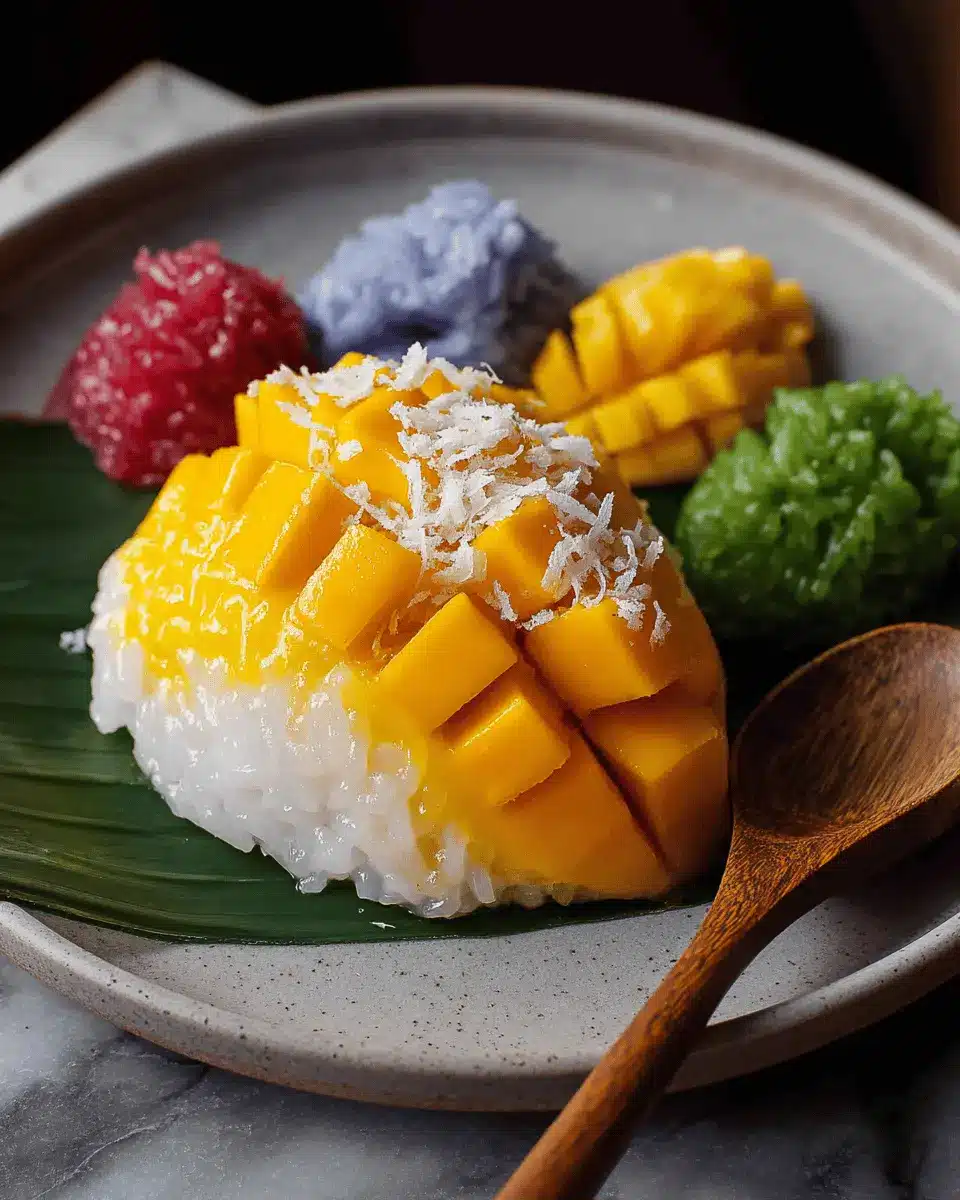
For a delightful twist on sticky rice with mango, consider using black sticky rice. This variation not only introduces a beautiful color contrast but also offers a unique nutty flavor. Simply mix ¼ cup of black sticky rice with ¾ cup of white glutinous rice for a delightful texture. Adjust the coconut syrup by using just ½ cup of coconut milk to maintain balance. The black sticky rice takes a little longer to steam, but the results are worth the wait!
Mango Sticky Rice with a Twist
If you're in the mood for something different, try incorporating other fruits alongside your mango. Fresh fruits like dragon fruit or pineapple can add a refreshing zing to the classic dessert. You can also enhance the texture by sprinkling toasted coconut flakes or even crushed nuts on top. These additions offer both crunch and flavor, making your sticky rice with mango experience even more exciting! Don't be afraid to experiment and make this dessert your own!
Cooking Tips and Notes for Thai Mango and Sticky Rice
Tips for Selecting the Perfect Mangoes
When it comes to selecting mangoes for your sticky rice with mango, the Ataulfo mango, also known as Manila or Champagne mango, is often the top choice. Look for mangoes that are:
- Firm yet slightly soft to the touch, indicating ripeness.
- Golden yellow in color, avoiding any green spots, which signify under-ripeness.
- Sweet aroma near the stem, indicating juicy fruit inside.
These qualities ensure that your dessert is bursting with flavor!
Key Cooking Techniques to Perfect Your Sticky Rice
To achieve the best texture for your sticky rice, here are some essential techniques:
- Thorough washing: Always wash the glutinous rice multiple times until the water is clear to remove excess starch, which helps in achieving the perfect, non-gummy texture.
- Soaking: Soak your rice for at least 4 hours (or overnight) to allow each grain to absorb water, ensuring even cooking.
- Correct steaming: Steam the rice over rapidly boiling water for 20-25 minutes. This method provides gentle heat, leading to perfectly cooked, chewy rice.
For more detailed information on cooking techniques and selecting mangoes, check out this link.
Serving Suggestions for Thai Mango and Sticky Rice
Plating Presentation Ideas
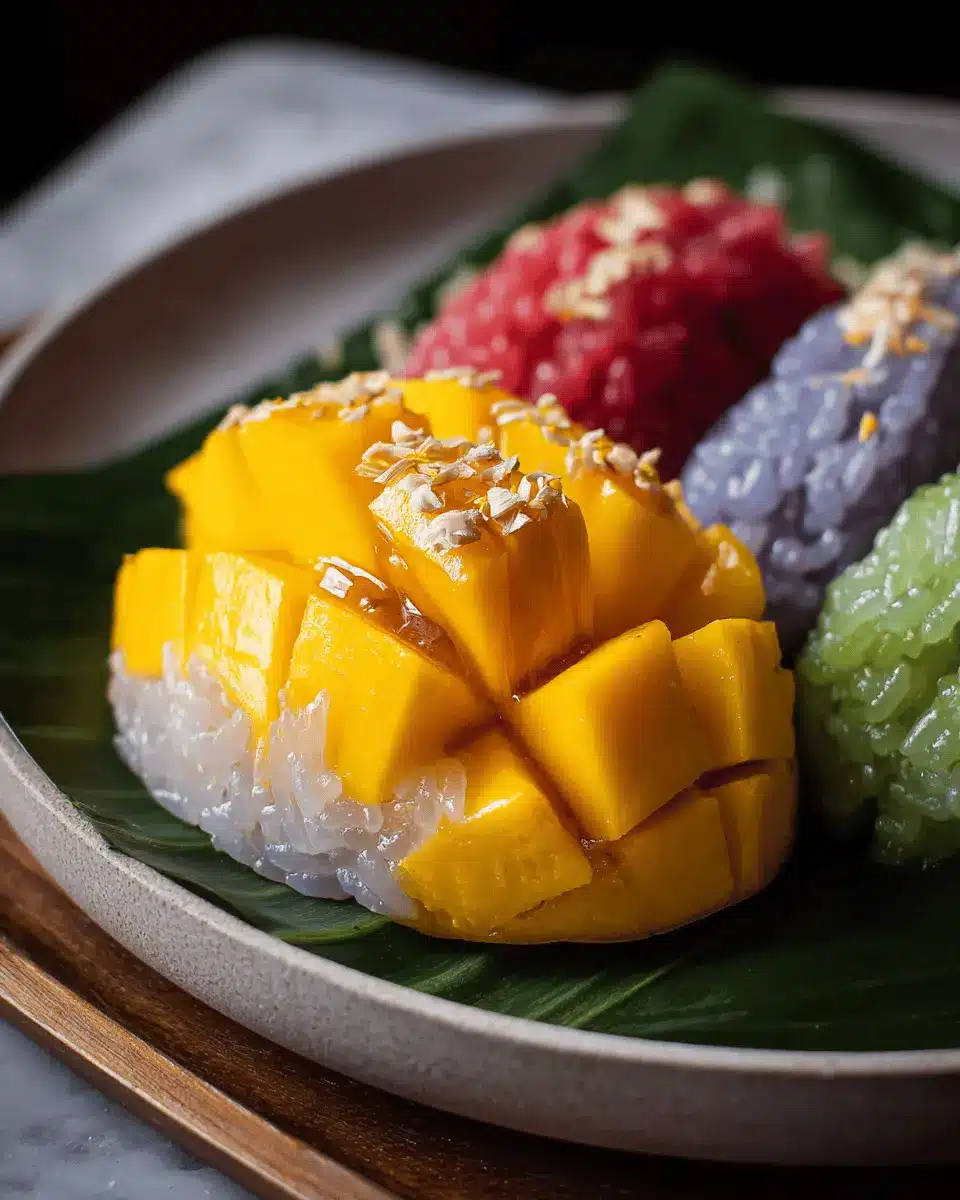
To elevate your sticky rice with mango, consider creating an eye-catching presentation. Use a rectangular dish to display the golden mango slices beside the fluffy sticky rice. Drizzle the salted coconut sauce artfully over the rice and garnish with a sprinkle of toasted mung beans for that delightful crunch. For an extra touch, place a small mint leaf or a slice of lime on the side to add color and freshness. Don't forget to serve it warm—this enhances the flavor and aroma!
Pairing Suggestions for a Full Meal Experience
For a complete meal experience, pair your sticky rice with mango with light and refreshing dishes. Start with a classic Thai salad, such as Som Tum (green papaya salad) or a soothing coconut soup. If you’re feeling adventurous, serve alongside grilled chicken skewers marinated in a zesty sauce or crispy spring rolls for a delightful contrast. As for beverages, a glass of Thai iced tea or a fresh coconut smoothie can be perfect companions to keep the tropical theme alive. Your guests will love this harmonious balance of flavors!
Time Breakdown for Thai Mango and Sticky Rice
Preparation Time
To create this delightful sticky rice with mango, you'll need about 4 hours for soaking the rice. This step is crucial to achieve that perfect texture!
Cooking Time
Once the rice has soaked, the actual cooking time takes about 30 minutes. This includes both steaming the rice and preparing the delicious coconut sauce.
Total Time
In total, you’re looking at roughly 4 hours and 30 minutes from start to finish. Perfect timing for enjoying this iconic Thai dessert with friends and family! For more tips on serving, check out this guide on Thai desserts.
Nutritional Facts for Thai Mango and Sticky Rice
Calories
A serving of sticky rice with mango typically contains around 300-400 calories, depending on the sweetness and portion size. So, it’s a delightful treat that fits well within a balanced diet.
Sugar Content
This dessert is sweet, with an average sugar content of approximately 30 grams per serving, largely due to the coconut milk and added sugar. If you're mindful of sugar, consider adjusting the sweetness to your preference.
Protein
While not a high-protein dish, sticky rice with mango offers about 4 grams of protein per serving. You can boost this by pairing it with a protein-rich side, like a handful of nuts, for a satisfying meal.
For more information on healthy eating, you can check out the USDA's dietary guidelines or Healthline’s nutrition articles.
FAQs About Thai Mango and Sticky Rice
Can I prepare the sticky rice in advance?
Absolutely! The beauty of sticky rice with mango is its flexibility. You can cook the rice a day ahead and simply reheat it before serving. Just make sure to store it covered to retain moisture. You can warm it in a steamer or microwave with a damp paper towel to prevent it from drying out.
What types of mangoes are best for this dish?
For the best flavor and texture, look for Ataulfo mangoes, also known as Manila or Champagne mangoes. They are incredibly sweet and have a creamy texture that complements the sticky rice perfectly. If you can't find them, try using Haden or Tommy Atkins mangoes as a substitute.
How can I make it vegan-friendly?
Making this dessert vegan is a breeze! Simply ensure that the sugar you use is vegan-friendly, as some sugars are filtered using bone char. The coconut milk and rice are already plant-based, making this dessert naturally suitable for vegans. Enjoy your delicious sticky rice with mango guilt-free!
Conclusion on Thai Mango and Sticky Rice
Thai mango and sticky rice is a delightful dessert that perfectly balances sweetness and saltiness. Its creamy texture and vibrant flavors make it a favorite for many. Don't hesitate to try this simple recipe; it's a delicious way to impress friends and indulge in a taste of Thailand! For more tips and insights on this dish, be sure to check out Pailin's blog for inspiration and variations!
Sticky Rice With Mango
Equipment
- steamer
- Mixing bowl
- saucepan
Ingredients
Coconut Sticky Rice
- 1 cup white glutinous rice Make sure it is long grain and a product of Thailand
- ⅔ cup coconut milk
- ½ teaspoon table salt
- ½ cup sugar
Salted Coconut Sauce
- ½ cup coconut milk
- ¼ teaspoon table salt
- 1 teaspoon rice flour
- 1 Tablespoon water
Others
- 2 Tablespoons shelled and split mung beans
- 3 pieces sweet, ripe mangoes Preferably Ataulfo mangoes
Instructions
For the sweet sticky rice:
- Wash the rice by placing it in a mixing bowl and cover with cold water, then vigorously swish the rice with your hand to release loose starch. Pour off the cloudy water and repeat the process 4 more times or until the water runs mostly clear.
- Soak the rice with room temp water for at least 4 hours and up to overnight.
- Preheat the steamer by bringing it to a full boil over high heat. Drain the rice very well, shaking off excess water.
- Line a steamer rack with moist muslin or a thin white tea towel and place the rice on the cloth. Steam the rice for 20-25 minutes over rapidly boiling water.
- While the rice is cooking, make the coconut syrup by combining coconut milk, sugar, and salt in a small pot. Cook over medium heat, and cover once it starts bubbling.
- Reheat the syrup when the rice is almost done. Pour the syrup over the rice in a mixing bowl and let sit for 20 minutes.
- Fold the rice to redistribute the syrup and let sit for another 20 minutes or until ready to serve.
For the salted coconut sauce:
- Stir the rice flour into the water until there are no more lumps.
- Combine the rice flour slurry, coconut milk, and salt in a small pot. Cook over medium high heat, stirring constantly, until the mixture comes to a boil.
- Remove from heat and let the mixture cool completely before serving.
For the crispy mung beans:
- Rinse the beans in cold water and cover with about 2 cups of water in a small pot.
- Over medium heat, bring the water to a simmer, then immediately remove from heat and cover for 10 minutes.
- Drain and rinse the beans. Lay on a paper towel to dry.
- Toast the beans in a lightly greased sauté pan over medium high heat until dry and crunchy.
- Let cool and store in an airtight container for up to 1 month.



Leave a Reply